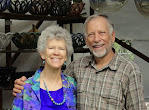
The most basic ceremony is simple to share coca leaves:
a curi curi we say, open our coca purses called
chuspas, pull out a small handful and place them in our friend's
chuspa. They usually return the favor. You should never take the coca in your bare hands, but offer your hat, or the tail of your blouse or your
chuco. If you MUST take them in your hands, at least blow on your hands to make them sacred before accepting the leaves.
Next level of coca leaf ceremony is to choose within your own chuspa 3 well shaped leaves, called a k'intu, imbue them with your prayers and then bury or burn them. When doing this with a group, you put your leaves together and one person takes them to bury or burn them. More complex would be to open an estalia, or coca-carrying cloth, which would be prepared previously full of leaves. Each person in the group comes forth, makes a cross or 4 direction gesture with their hands over the leaves and chooses their own k'intus, often more than one set of three leaves. Men remove their hats as for a prayer when they choose the leaves.
We did a ceremony like this this afternoon, May 4, on our last day in Lima, with Celbia and Kusi, using a bandana for our estalia. We started with an intention for the ceremony, but each made his/her own prayers: for prosperity for all, for Sam & Tara's safe travels, for solutions of the land border disputes, for health and love. Here in the city, we did our ceremony on a little picnic table under a peach-colored bouganvilla outside a tienda, where we bought a soda pop and offered some to Patchamama as well. At the end of the ceremony, Sam placed the leaves on top of my chuspa and I buried them a couple of inches below a rock in a sweet little flower garden nearby.
On Easter morning, the ceremony is a step more complicated from the simple estalia. Traditionally, every family on Taquile makes a despacho, a paper-wrapped dispach of prayers. Each person's offering is placed on an open piece of paper augmented with flower petals or herbs. Sometimes symbols are offered, such as paper money or a model or drawing of a house. When everyone in the family has chosen leaves, the despacho is finalized with sweets, wine, alcohol and wrapped up to take to the big ceremony on the highest hill on Taquile to give to the Pacos to burn.
You see, Easter is the date for the biggest coca leaf ceremony on Taquile for the whole year, a ceremony to pay the Patcha Mama for the year. We got all dressed up in our finest Taquile clothes and hiked the length of the island to the high point on the north end of Taquile. The rock-fenced enclosure has another interior rock-fenced enclosure where the
pacos collected the individual family offerings. We weren't allowed in that inner sanctum, but we were welcome to participate in the group ceremonies. This year we were a bit late after eating our
watia, just in time for the after-ceremony drinking party, but Sam and I attended two years ago when we saw more of the ceremonies.
All of the island's officers, or authorities, were gathered at a stone table dressed in full regalia: black trousers, white shirt, black and white vest, red cumberbund, plus multicolored knitted earflap hat under a black felt sombrero and a black short jacket. Many also carried a short staff. Their wives were seated on the ground facing the men. Taquile has two women authorities now, a recent change in the traditional male-only office holders, and they sat with the men in the row behind the table. The table had several rounds of large
estalias full of coca leaves. Sometimes the people attending were invited to come up and choose leaves, sometimes only the authorities chose leaves. Sometimes people would go around and generously pass the leaves out among the attendees and then we would pick our own
k'intus which would soon be gathered up to add to the offering. Beer was offered all around by the authorities and individuals would offer their alcohol, serving from the bottle cap.
New Age Tourism: A guide in Puno claims to have been called by PachaMama for spiritual tourism. We happened to connect with her group in time to be invited to a ceremony she had planned with a class she and her partner were teaching. The students were tour guides and artists and restaurant/hospedaje owners from all around Lake Titicaca. Her ceremony reminded me of our Colorado Winter Solstice fire ceremony combined with a lake
limpia. They kept saying this was a very ancient ceremony, but it seemed strange to me to write one's intentions on paper to put in the fire instead of using coca leaves. Silvano attended a second ceremony from this group a few weeks later and reported that they used coca leaves in a shorter ceremony, which sounded like an improvement. This group participated in a second ceremony in the afternoon, a strong traditional coca leaf ceremony led by a aged Taquile
Paco (shaman).
The
Paco had two assistants: One would pick out
kintus of three coca leaves and hand them to the
Paco, who dipped each in wine, called mountain or locale by name one at a time, blew on the
kintu and placed it on the pile on top of a large piece of paper. The second assistant would place flowers and a pinch of herbs on top of the leaves. After a while other people called out suggestions of places to include in the naming. I thought of our Colorado mountains and included them in my own offering, but didn't call them aloud. By the time he finished, the coca leaves were a few inches deep! It took an additional large piece of paper to wrap up the pile to complete the
despachio. The
paco and his assistants made a couple more
despachos, including one bought ready to go from the market, full of candy and paper money, and then built a fire made entirely of dried cow dung, started using alcohol. When it was burning well, they submitted the
despachos to burn, also lots of incense. The circle of people gathered around were invited to toss in some powdered incense, which not only smelled great, but made a delightful flare of fire.
Afterward we shared some alcohol and danced to sampoña (pan-pipe flute) music and walked up to the restaurant and house where the visitors were staying. Beer was shared all around and some speeches given. Our friend from many years, Juan Quispe Huatta, became the defacto master of ceremonies, and he invited me to speak. I emphasized that although I love Lake Titicaca and certainly aknowlege the sacredness of this place, we need to remember that Patcha Mama is everywhere, that the whole globe is sacred and deserving of our protection and respect. AND that if they are going to promote Spiritual Tourism, they need to include all of Taquile (and other places around the lake), not just this one restaurant.
 Sam and I are excited to host a trio of textile artists from Taquile Island this coming November and December. Our guests include our "son," Silvano Huatta Yucra, Juan Quispe Huatta, and Luz Medy Flores Machaca. They are being brought to this country as part of a dance troupe to help celebrate the 40th Anniversary of the InterAmerican Foundation in Albuquerque, New Mexico. With their airline tickets and US visas acquired, we are bringing them to Colorado for an extended stay. Taquile is known for its detailed figured weavings and knitted goods. It was recently declared by UNESCO as an Intangible Cultural Heritage of Humanity for its Textile Art.
 collected textiles, showing knitted as well as woven work
 detail of figured weaving
 Ruperta and Silvano demonstrating weaving and knitting on Taquile


 Rosa will have a new LED efficent light in her new kitchen (the chimney is already installed above a beautiful wood cooking area with outside air intake!)


 Next you rake out most of the ashes and coals and throw in a handful of potatoes.
  Knock in the dirtclods at the top of the dome and break them up. The soil is very sandy, so easy to break.
 The kids made their own small watia and added fresh corn in the husk when it was ready.
 After an hour or so, come back and dig it all up. Some potatoes are a bit burned or crispy like potato chips, but mostly the food is perfectly cooked and wonderful. Brush off the sand (Hey! it's sterile!), wrap it in an uncuña (handwoven food-carrying cloth) and gather the family around. We dipped ours in avocado-onion-tomato, fresh piquante salsa, and the traditional salty green clay. Sometimes they make lakeweed (like seaweed) cooked in milk.
 We brought Cusi a gift, a set of artisan projects, from her godparents Luke and Ellen from Gunnison. In this picture she is concentrating on an arrangement of beads for a bracelet for herself. The candle making kit suggested using a hair dryer to warm and soften the pressed wax so it could be rolled around a wick, but we figured out that body heat would do the trick! We've had fun working together with the projects.
 Cusi's little sister, Sarita. On our 2006 trip Sam made a very special relationship with her just as she was learning to walk! Now they are fast friends.
 Sam has remade a magic relationship with sweet, shy Cecilia. I did something to make her laugh and slightly cover her face just as I snapped the picture. He admits that these little girls easily steal his heart.
  Laundry drying at the rough dock just below our house.
 My good friend, Nancy Schweiger, eats watermelon here with Eufrasia. Nancy and Sue Pritchett are godmothers to Ivan, Silvano and Ruperta's oldest son. This is their first visit since cutting his hair in the godparent ceremony 7 years ago.