Tuesday, February 10, 2015

Blessing of the First Seeds

Llachon (with an accent on that "o"), is the last town on the end of the Capachica Peninsula.

We were honored by being included in the annual Blessing of the First Seeds Ritual. We are staying at the home of Asunta and Armando. Asunta is the big sister of our oldest goddaughter, Noemi, and is married to Armando who grew up her in Llachon. We borrowed traditional clothing. This is my outfit all set out on the bed:  montera or shade hat, jacket, chuco or head covering, and skirt.

The day starts with a procession from the plaza up to the furthest high point on the Capachica Peninsula, known as Apu Karu, or by an older title, Auki Karu. Leading the procession are three men carrying incense censers. They are followed by the village officers or authoridades and their wives, three shaman or pacos, the band, and then the rest of us. Sam and I filed in among the authoridades, giving them coca as Armando instructed us. I had given Armando our camera and we had permission to take pictures, so most of these photos are his work.

incense censer
The procession stopped several times to rest, giving us time to become more aquainted with others, to share coca and take up some of the weight that needed carried to the top of the mountain.
giving coca to the authoridades
We were given white flags to carry in the procession. About 45 people walked in the procession, but by the middle of the ritual over 200 people were present.
Sam looks dapper in his Indiana Jones hat, yes?
Our first ritual stop was at the cross at the top of the hill, blessing/smudging with the incense. Sam and I were both invited to swing the censer in front of the cross.
Then up the the sacred stone circle, a walled room where the ritual will take place:
First speeches and we pass before the authoridades and their wives, greeting--and being greeted in return--with hats in hand, "Que sea buen misa," or "May it be a good mass."
note Sam on the left
The stones that block the doorway to the sacred circle were removed and first in were the incense censers. Each of the authoridades swung the censer around the center stone table in blessing/smudging and the censer was handed to Sam. He also blessed the stone. I held back, thinking that we might be overstepping our welcome, but I was called forth to perform the rite. We were the only ones besides the central authoridades and their wives who performed this rite. I felt very honored.

Shortly afterward, coca was passed around and everyone got in line to bring our prayerful chosen coca leaves (known as a kint'u) to give to the pacos which they added to a despacho, a paper-lined collection of flowers and wine and incense. The pacos were focused and attentive to each person, to each collection of prayer-laden leaves. People have come from all over the region to present their prayers for health and good crops.

They also bring the new potatoes, samples of their first crops of oca, quinoa, fava beans, corn. These First Seeds are placed on the round stone table/altar in the center of the circle.
First seeds being blessed
Candles are lit and offered.

holding our candles
We take a little break in the middle of the day, as the long line of people are still in line ofering their kint'us. Asunta has brought lunch, knowing that the community food would be delayed. Armando takes our picture with Taquile in the background.
All dressed up!
Then the dancing starts! Three times around the outside of the stone walled circle, then three or more time around the center round table with the seeds. We spill wine on the seeds and pour it down each other's throats. Four dancers are supposed to represent four kinds of potatoes, but I don't know which ones--then suddenly they tell me that I am the White Potato (with my pale skin and white hair). It is great fun. I pause for Armando to take my picture:
The White Potato dances around the seeds
Those who brought their first fruits mix what was brought and take it away. Ceremonial objects in a cache under the altar are attended to and the cache is sealed. The pacos light three fires for each of the three despachos, which they burn, tending the fires until they are pure ash.
The sacred space under the table is sealed
We leave the sacred circle and gather for a community lunch. Steamed food is placed on clean cloths on the ground, as is the common way to make a picnic here. Sam and I are invited to sit with the authoridades. Again, I am amazed at the honors given to us.
lunch
Finally the doorways are sealed with rocks, The attendees have already begun to find their own way down the hill. We wait and complete the ceremony by joining the procession down, as we did this morning for the procession up. Armando gives me back the camera and climbs up to remove the Peruvan Flag and the White Flag that he placed next to the cross this morning. Sam carries the Peruvian flag down.
Armando climbs up to take down the flags
The next week is to be dedicated to blessing individual fields.
We visit all of Armando and Asunta's fields over the next two days, decorating with flower petals and colorful paper strands and sprinkling wine.
Sam, Asunta, Jhoel, Tara, Kusi, Sarita
Flowers in the air

Tara sprinkles wine on the potato field.


A thatch-roofed shelter near our high altitude field

Ancient Chulpa above Llachon


Sunday, February 8, 2015

Candalaria on Taquile

February 2, 2015, Candlemas, Imbolc, Groundhog Day, the cross quarter day between Winter Solstice and Spring Equinox

It is a huge celebration in Puno two weeks of dancing in the streets and blessings the Virgin de Candalaria. They say it is second in South America only to Carnaval in Rio de Janeiro. We have participated in Puno in past years and wanted to avoid the craziness this year. Turns out that Taquile has its own celebration, for one day in the main plaza. The dance is Negritos, originally a cerebration of freeing of the black slaves.


This was our first time to dress up in our indigenous clothing and celebrate properly. Takes some getting used to.


I´m too far from the band to get good sound.

Teaching English on Taquile

A group of Danish people are running a summer vacation English Class for Taquile youth. Twenty soles per month, or about $7. Quite a few of our family members are enrolled: Clever (age 10 on January 29), Ivan (age 14), Natalia (age 17), plus from Felipe´s family his wife Ines, Illliane and Anali. We visited the class and were invited to help with pronounciation. Then we offered to teach extra classes while they go to Puno to teach. Great fun. Teach how to say the English "th" sounds. I think not nearly as difficult as all these four different "g" and "k" and even "p" sounds in Quechua. An then there is the short "i"  and that every vowel "uh" sound that we use. I act things out with big gestures. "Uh" is a sock in the gut. Now nearly every kid on the island knows us and greets us with "Good morning," or at least a big smile.
Add caption
The first day, Sam and I made up a dialog of meeting tourists at the boat and inviting them to say overnight, "We have a room where you can stay." I also notice that Quechua has a word for "evening" which I haven´t found. My meager Quechua has been very helpful.
The Danish teachers drew pictures of their families. 
Contrasts

On Friday (30 Jan.) a storyteller joined us. He is a history teacher in Lima and an actor, originally from Cusco and well versed in Fables, Legends and Tales in Quechua. He has us put all the chairs in a big circle. He was most dramatic and dressed in typical clothing from Cusco area. Unfortunately, his Quechua is very different from the language here. Afterward Ivan told me that he missed about half the words. I knew that our Quechua here around Lake Titicaca differs from the Cusco Quechua, but I did not realize that it was that different. We borrow from Spanish and Aymara, but now I learn that two very old languages, perhaps from the Teohuanaco Culture also influence our Quechua. Pukinas and also Pukaras are the names of the old languages.
Mario Warangamaki Castillo, narrador oral indigena
He finished his stories with only about 30 minutes left in class, so I presented some coyote tales. One where coyote gets in trouble for laughing at Spider Woman´s rope coming out of her butt, and another of how coyote tried to stay up all night to be in line early to get a more powerful name. The snoring always gets a good laugh.

Arrival on Taquile 22+ January 2015

Reunited with our Taquile Family. Love abounds!

We gave gifts and celebrated our arrival.
One set of gifts continues a "pen-pal" relationship from friends of Nancy S. introducing Alicia´s daughter Jasmin Lisbeth, 3 years old, to their own little daughter of the same age with the gift of a very well made stuffed Moose. Lisbeth loves it, put a leash on it and drug it around, used it for a ball, tossing it in the air. Definitely a hit.
Lisbet with her Moose

golf ball sized hail last September broke through the skylights


We also gave away the LED lights that travelled all around Peru last year, never to arrive on Taquile, but promised to family members, and packaged and labeled. Everyone is happy to receive them. One gift is the Solar Hot Pot donated by S.H.E., Solar Household Energy thanks to Louise Meyer. We are to keep a record of use. It has, so far, boiled water, cooked beets, roasted potatoes, boiled soaked dry corn. It is rainy season, so uses are limited.
efficient Super Bright LED light strips

We also placed equipment into the store of Eufrasia and Delfin to sell. The LED light strips from Super Bright LEDs give 690 lumens for 7.5watts and can light a big room or allow fine weaving detail work under good light. The 100 watt inverters sold out in less than an hour. The charge controllers sold out within a few days. We still have a few battery indicators. They can serve as human charge controllers, warning people to disconnect their batteries if full on a sunny day. I am shocked by the number of people who run their systems without charge controllers, since an over charged battery can blow up. Wish we had brought more.
boat of Elias in progress

view from the top of Mulcina, Taquile Island

Volley Ball in the yard

Mayor Zenon and Florentino, officers of Taquile

Showing LED lights in Taquile City Hall

Snowcapped peaks across Lake Titicaca

New sports field on Taquile

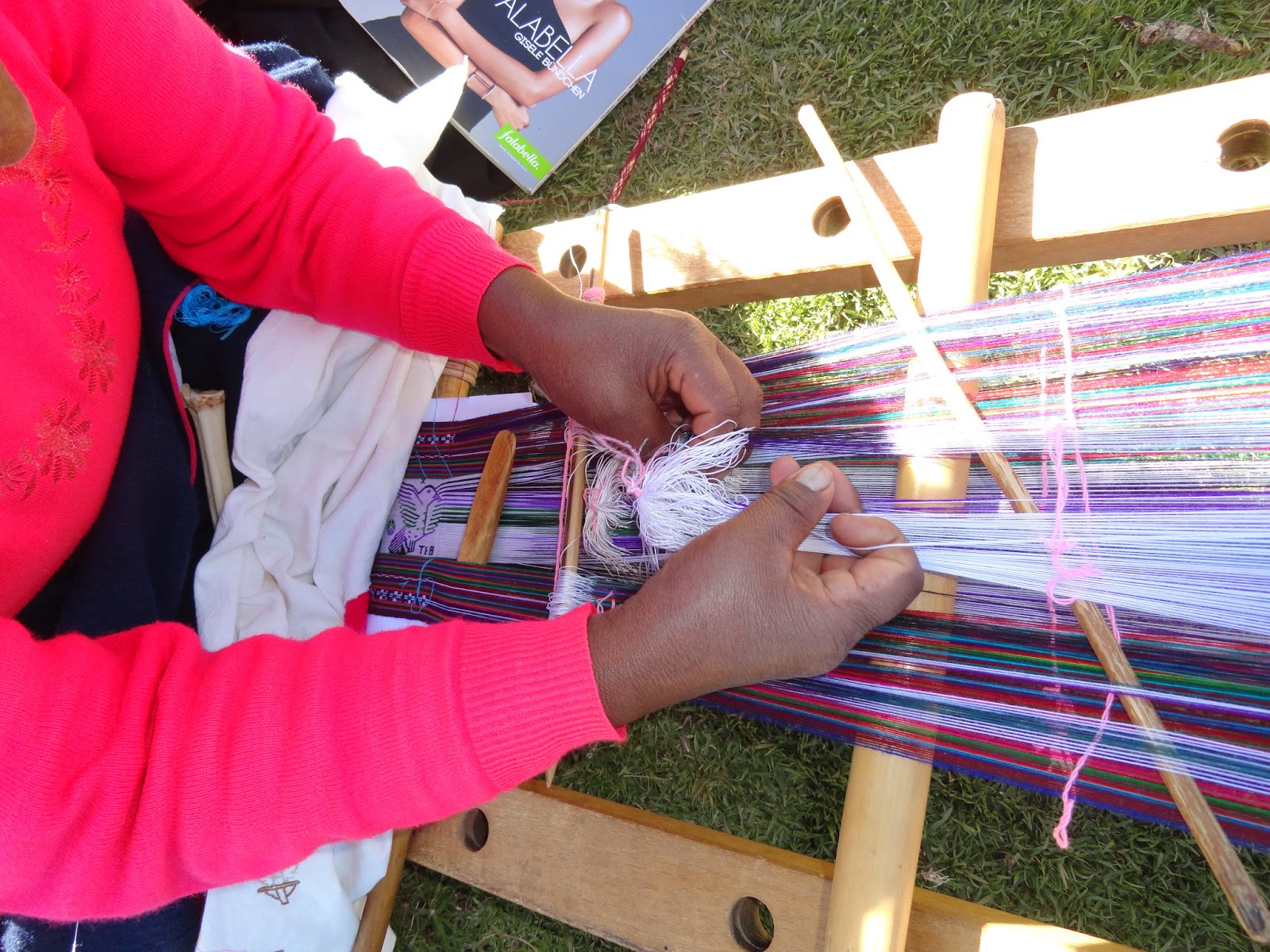
detailed Taquile weaving

Taquile view to an arch

Oh dear, direct tv on Taquile

Hot water is nice

The hike to the top of Mulcina, Taquile

Visiting Chilean jugglers

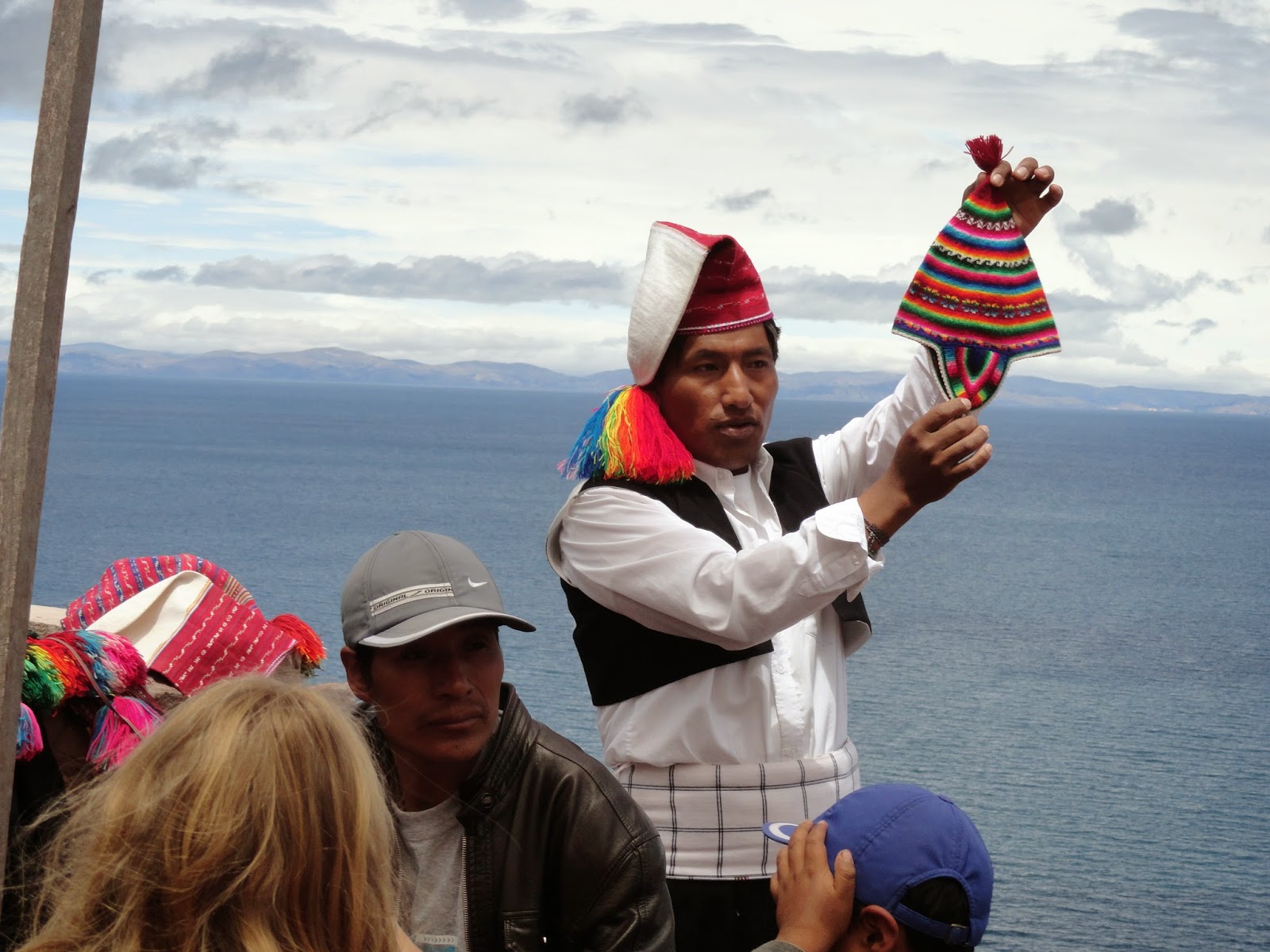
Fredy is guide, interpreting Taquile clothing

Solar water pumping on Taquile Island

The beach on Taquile

Ivan makes sand bowls with water on the beach

High tech/low tech: solar panel on thatched roof with rubber wash basin

ancient wooden door lock

Clever climbs a rock


Wednesday, January 21, 2015

Blessing the Boat in Progress

21 January, 2015 Wednesday, Puno, Peru

Lino is a master carpenter and boat builder. He and his son, William, have been working on a new boat, a 12 1/2 meter -- about 38-foot -- tour boat for the last two years. They started with funds from selling the boat they had finished and which we helped put into the water in 2013. A couple of times they had to stop and work on other boats to make money for this one. All of the family has pitched in and, although they call it Fredy´s boat, it is really of the whole extended family.

It floats upright in a backwater of Lake Titicaca, just past the fancy Liberador Hotel, in the community of Chulluni. Chulluni is where most of the families from Uros live while they are not entertaining tourists on their reed floating islands. The outer hull is all made with a strong, water-resistant wood, handmade tongue and groove boards, well finished. The top is fiberglass over plywood and the front over the cabin is painted metal. I´ve never seen a boat with such beautiful pictue windows all along the sides. Tourists will love the clear views. It has a bathroom WITH a sink for handwashing, still to be installed.


A lot still needs to be done to finish it, not too much woodwork: floors and some of the walls. The biggest expense will be the 6 cylinder diesel motor. With the strong dollar going up against the Peruvian Sol, this will be tough to get together, perhaps $9,000 for the motor alone. Close to $10,000 to finish the whole thing. Sam got the truly bright idea of initiating a Kickstarter campaign to buy the motor. Big donors would be able to use the boat if they came to Puno. It´s an idea.

So we made a blessing ceremony. First Valeria brought her manta with an uncuña (food-carrying cloth) full of potatoes and chuño (freeze-dried potatoes) and fish, with a fresh salsa to spark it up. Then we opened the estallia, the ceremonial coca cloth and everyone came forward to choose coca leaves and imbue them with their prayers for the success of the boat. Lino took the role of Shaman and sculled the little dory out among the reeds to offer our prayer-laden offering to the Mother Lake.

Afterward, beer and soda and lots of coca sharing before we disbanded and came back to Puno to buy the groceries for the next couple of weeks on Taquile. We go to Taquile tomorrow morning and I will not be posting again for awhile.

Tuesday, January 20, 2015

Lima-First leg 2015

We landed in Lima early in the morning of Friday, 16 January. Alejandro met us at the airport. He grew up in Lima (and north in Huacho); is the husband of Noemi, our goddaughter. They have three delightful children so we are the grandparents (¿"grand-godparents"?) of Alexander nickname Chani, age 6, Dayana, age 3, and little Bianca, 10 months (born March 12). Sunday was a good day for a family outing to Lima Central, the Plaza Mayor and Parque M            with ruins from the XVII century  plus a section with kids rides.


Sam is fabulous with wrestling and tickling and paper airplanes and lifting high in the air. He was making this little zzoop sound as he lifted Dayana up and so she would reach her arms up and say zzoop to ask to be lifted. So sweet.

Daddy Alejandro with baby Bianca

On Saturday we went into the central part of Lima to buy our airline tickets to Lake Titicaca and to get some efficient LED lights for the house of Noemi and Alejandro. We knew that Delfin and a dance troupe from Taquile were in Lima and had talked about meeting downtown somewhere, but could not connect by cell phone; did not know how we would meet. ¡There they all were in the Solar Gear Stores! Where else would you expect to find a group of people from a village with the most intense use of solar energy anywhere?

More details later. I write this from Puno, now, hanging out at 13,000 feet, first day aclimatization to the altitude, so taking it slo-o-o-o-w.