Showing posts with label Coca. Show all posts

Saturday, April 26, 2025

Easter 2025

Singing in the Churches 

A few weeks before Easter, groups of singers gather to make up new songs and practice for the nights and a day of singing in the churches. Taquile is organized into six suyos, or sectors or neighborhoods. Each has its own chorus and musicians. They each created at least a dozen new songs.

Giant pots of soup feed the singers before practices and performances. 
Most of the women sit on mats snd blankets on the floor.


The authorities keep everyone awake with coca leaves. Thursday, Friday and Saturday nights, they sing until 1:00am

Easter Day

After Easter mass in the big church in the plaza, the authorities leave the singers and lead a procession to two ceremonial sites. We joined the one to the mountaintop, Mulcina. 


Life and Death

 On Taquile Island, the custom when someone dies is to refrain from productive work until the body is buried. So that means no weaving knitting; no work in the fields. It’s OK to play volleyball and of course to cook food since we all have to eat.  

A complete life 

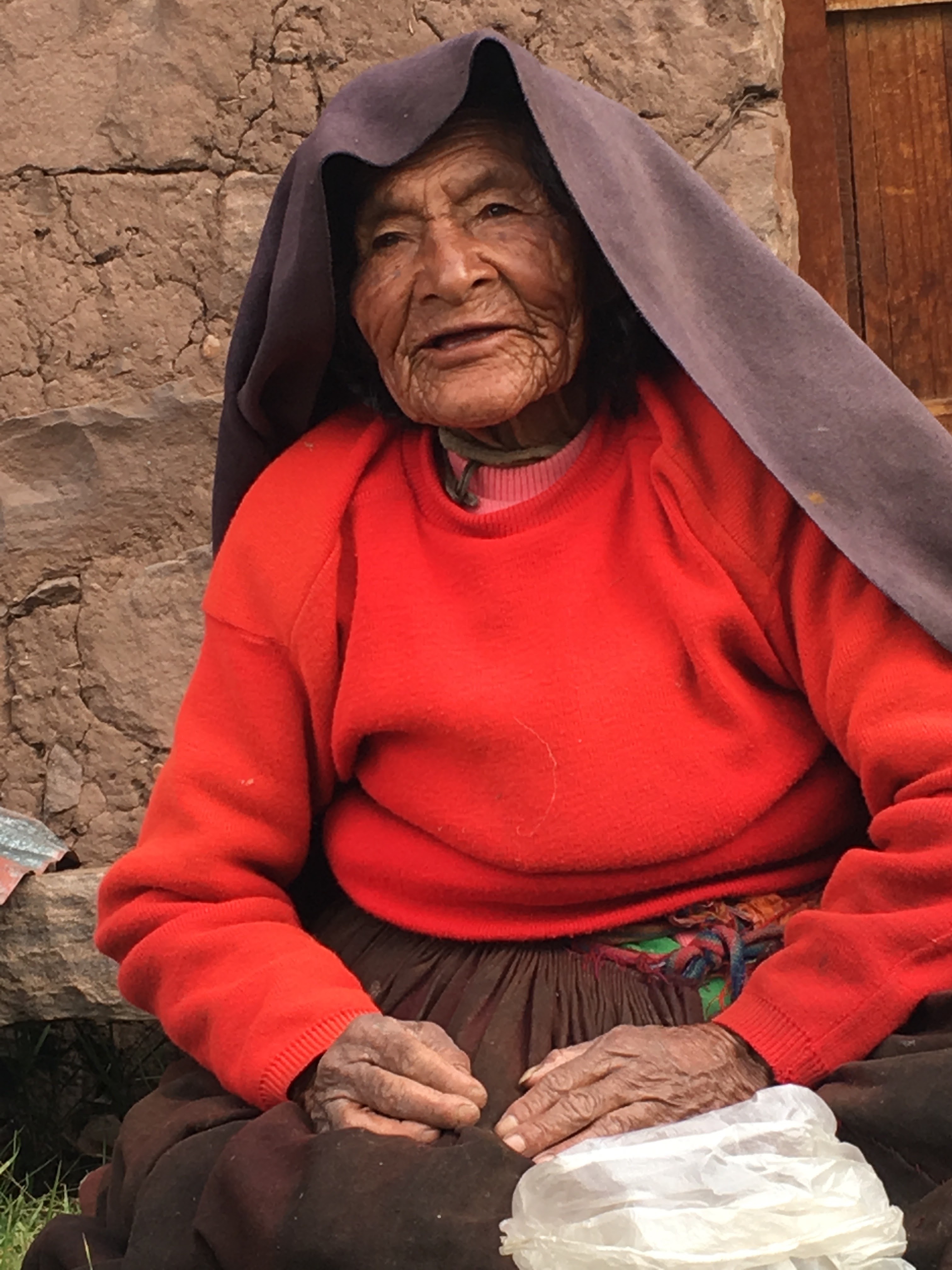
The Matriarch of our family Mercedes Cruz Huatta died in the wee hours of Friday, April 11. Her age is estimated at 109 years. She is survived by one daughter, 5 sons, and numerous grand- and great-grandchildren. Two daughters died before her. She didn’t have a birth certificate, so her age is estimated based on that of a girlfriend who did have a birth certificate. She was able to participate in household activities until about a month before her death, when she spent much of her time in bed. 


Picture from 2019

Years ago, we participated in a burial and the body was sewn up in fabric. However, Mercedes was honored with a wooden casket.  Silvano had gone to the house in the predawn hours, and we came later. I sat with the widower, Sebastian, who shared how “triste” he was feeling. I showed him pictures of his wife on my camera from 2019. They had been married for 30 years. After eating soup, the top of the casket was opened to view her face. Coca k’intus were made and shared. 


Then the procession


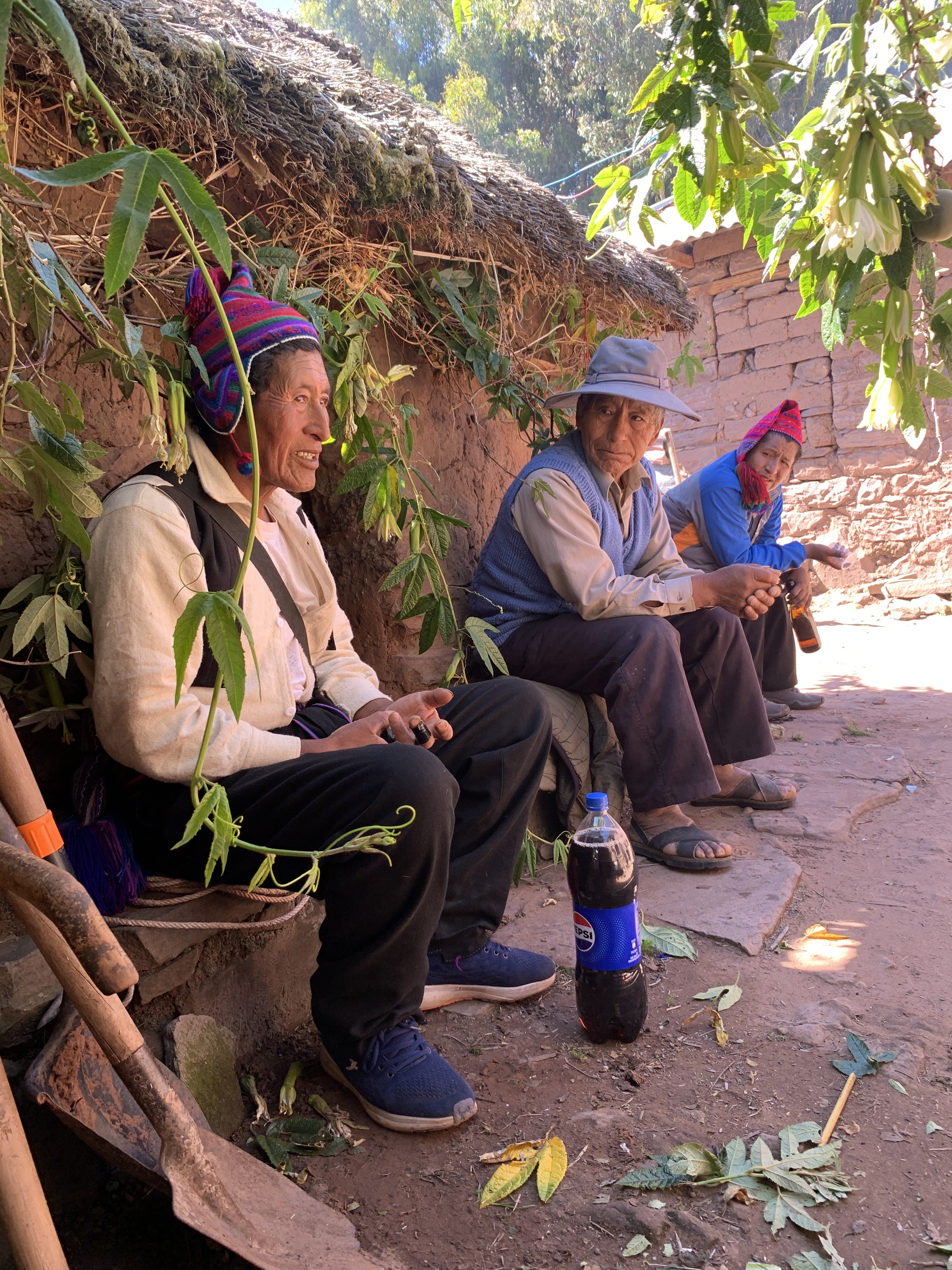
The casket was carried to the burial site in a procession of about 40 people who witnessed and men dug the grave. The soil was clay and sand with, luckily and surprisingly, no rocks.  We all shared coca and beer or sodas over the two and a half hours of digging. 


They carefully measured the casket and at the moment of lowering it into the grave, a chorus of women broke out in harmonic songs.  


We cover the casket in flowers before mounding up the dirt and sod. It was a rich and moving ceremony, followed by a procession in the dark, by a different route, to the house and a cleansing smoky smudge. Close family stayed late and Sam and I returned home. 


The next day we/they wash everything. 

Clothes worn to the burial, blankets from the sick room, more. We did our own here at the house, whereas others (close family) worked nearer the grieving household at the lakeshore. I’m told they will take a different route from the lake back home.


My understanding is that the spirits of the dead need to be acknowledged, redirected and maybe even confused. Hence, not walking back through the same path, so any lingering spirit can’t latch back on. And all the washing, the cleansing. 


Church service and family day


The following Wednesday was to be the church funeral service and mass for our beloved Mercedes. We cooked and served sheep meat, both as soup and as barbecue for the participants. Sebastián offered two of his remaining 3 sheep to be served up in a family feast. 


Tuesday I helped butcher two sheep by holding the legs, or fetching basins, while Silvano and Alipio did the hard work. We gave the sheep our gratitude, and they were killed and bled quickly.


On Wednesday, we got up at dawn to walk to Huyllano for the service. Saturn, Venus , and Mercury were still visible in the eastern sky (though you might barely see a pinpoint of light in this photo).


It was a mass in the Catholic Church.

 Then back to the house for a breakfast soup, lots of coca, offerings, and stories. 

One of my favorite stories about Mercedes was when we traded a very small solar electric system with her, her first light besides candles. She was about 80 years old. It was when white LED’s had just been invented. The system was a 10w panel, a little solid-state battery and three small LED lights. When we visited her a week later, she clapped her hands together and said, ”I feel so young now that I have lights!“ That panel and the lights are still functioning; the battery has been replaced.

See the little panel on the thatched roof?


Patcha Manca

The cooking event was a Patcha Manca, earth oven, wherein flat rocks are built into an arched structure, heated for several hours by burning eucalyptus branches, and small logs. 


When the rocks are hot enough, the arch is disassembled and reassembled with food. Foil has become the wrap of choice for the marinated meat, keeping the juices intact and everything clean. Meat first, then potatoes and oca (sometimes fava beans). Once all the layers are built up, a generous pile of muña (a perennial bush in the mint family) covers the rocks, then tarps , then soil, insulating the whole pile for another 1/2 hour. Waiting. Then the disassembly, serve and eat. 
Delicious !

The extended family spent the entire day together.


We told stories, shared coca and food and drink. Samuel and I felt very honored to be so deeply included in this moving and important time in the life of our extended family.  


Monday, June 6, 2022

Coca Chuspa Fabric Bags

Chuspa, Quechua word for Coca Purse, 

the fabric bag traditionally carried by Taquile men for the sacred and medicinal coca leaf. 

Coca is very special in the Andean culture. The leaves are used as a medium for prayer, as a divination tool, as a means for blessing. In its most simple usage, coca leaves are given and exchanged as a gift and a greeting, almost like a handshake. With the exception of certain festival dress, Chuspas are only worn by married men. They tie the bags around their waists for convenient quick-release use. 

How to tie your fabric bag around your waist 

So much of women's clothing is without a pocket, these soft bags become an instant pocket. You can carry it as a crossbody bag, or if the strap is long enough, you can tie it around your waist as a real pocket. I personally have a wardrobe of various colored chuspas and love that  I can DANCE IN MY PURSE! You can see some of these fabric bags for sale on our Etsy site: Taquile Friends The following video shows how you can tie it on for quick-release.


How Coca and Chuspas are traditionally used on Taquile

Exchanging coca

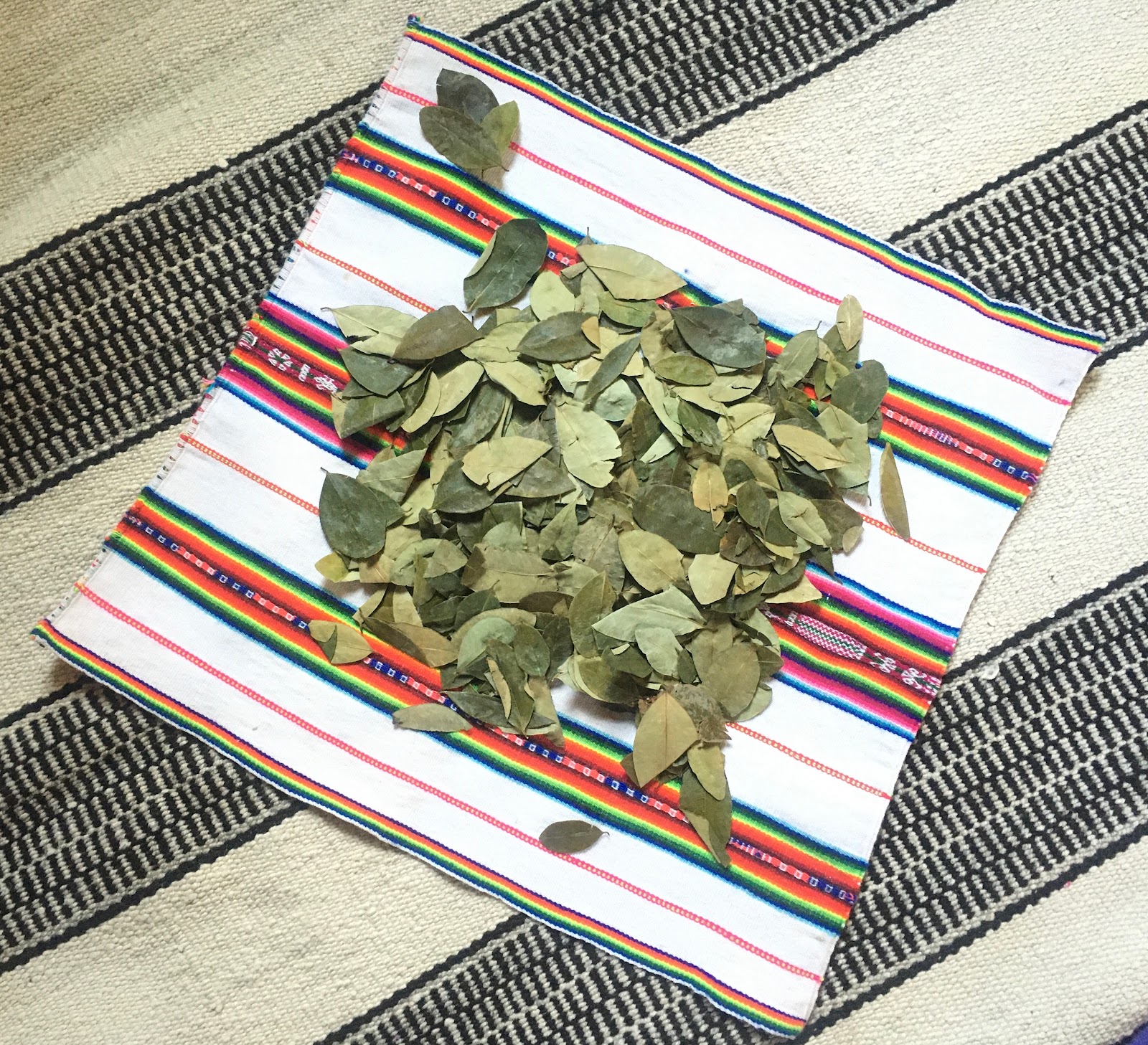
If two men meet on the trail and stop for a brief chat, they will open their chuspas, take a few leaves and place it in the other man's bag, usually simultaneously with their companion. In this everyday ceremony, leaves are not received directly in the hands, but always on cloth (or plastic bags): the top point of a hat, a pocket, a shirt tail, a woman's headcovering. Often they will observe if a well-shaped leaf lands right side up, an indication bringing good luck. They then may take leaves into their mouths, often combining them with a small amount of leupta, an alkaline ash substance that activates the medicinal qualities and makes the mucous membranes of the mouth slightly numb. 

In English, we commonly say we "chew" the leaves, but really, chewing is minimized. The leaves are tucked between cheek and gum, worked gently, and moved around in the mouth. The Quechua word we use on Taquile is something like pictchar, not masticar. Medicinally, coca lends energy, suppresses appetite and thirst, helps somehow with high altitude blood/oxygen and also with digestion and glycemic response. 

A simple coca leaf ceremony is for an individual to select three leaves from their own stash, be it their chuspa or plastic bag, choose three well-shaped leaves and imbue them with their prayers and intentions, then bury or burn them as an offering. These three leaves are called a k'intu. We always do this offer them to the water, "pay the lake," when commencing the sometimes perilous trip across Lake Titicaca.

Estalia Ceremony

A deeper coca leaf ceremony uses a specially woven cloth called an estalia. On Taquile it is traditionally white and red. Coca leaves are unwrapped from the cloth and each person selects his or her own k'intu. These are at least three leaves, and often multiples of three, especially nine leaves. These prayer-filled leaves are then taken by the designated shaman to be offered. Sometimes they will be placed on a paper with various elements, such as sugar for sweetness, flower petals for beauty, wine and alcohol for medicine, and even money or small drawings of desires and intentions. This wrapped paper is called a despachio; you might think of it as a dispatch or message to the spirit world. The markets in the cities often have sections with offerings of all sorts of items intended for inclusion in sacred despachios. 

On very special occasions, such as Easter, many more k'intus are made and offered, and complex despachios are given. On Easter, on Taquile Island, the Patchamama is "paid for the entire year." 

I tell about these ceremonies from my own experience over our many visits since 1986. Other parts of Peru certainly have their own versions of these sacred ceremonies. You can see more of my stories if you delve back into past posts. Please follow if you enjoy what you see. I don't post frequently unless we are actually in Peru, though our 2020 visit might deserve non-consecutive stories, since I was unable to post for the latter part of that visit.


Sunday, March 19, 2017

Excursion: Cutimbo


Family excursion to hot springs and more ruins
Carnaval ended with a blowout on Sunday night. Fredy's boat had come with cargo and was poised to return to Puno empty on Monday, so we decided to fill it up with passengers and begin a family excursion in spite of hangovers and exhaustion after a week of parties. We especially wanted to include the family of Francisco and Juana with their daughter and granddaughter, Olga and Rosie. School will not start for a week, so this was our last chance to include the kids.

First thing in the morning, we hiked up to Olga's family to talk them into coming.
Tara, Rossi, Juana and Francisco in their kitchen
 Olga's brother had sprained his ankle during Carnaval, and needed to return to Tacna for his work, so the offer of a free boat ride convinced them to come. Olga deferred, but we filled the boat and started the journey:
Rossi with Tara, Amantani and Taquile in the background
Sam with Lisbet
Kusi and Edith, girlfriend cousins on the boat
Esteban's son-in-law, Demian, lives in Puno and runs a bakery with a brick bread oven plus owns cars to distribute the bread. One of his vehicles is a big van (combi) that legally carries 15 passengers. We hired the combi, filled it with 18 passengers, including Demian's extended family and went first to the Loripongo hot springs about a hour drive from Puno. Simple place, where they empty and clean the tubs after each use and fill them with fresh and very hot water. It doesn't take too long to cool down enough for a luxurious healing soak.

Ruperta and Eufrasia got up early to roast chicken with sweet potatoes and potatoes in the bread oven to add to our lunch.  Good thing, because Sam and I only brought boiled eggs, cheese and bread for 12 people. Turned out we had a feast of a lunch after the hot springs.
Our driver waves; Eufrasia dishes out the chicken
Rossi and Juana enjoy their meal


Cutimbo
Driving back toward Puno, we stopped at Cutimbo, Inca and Pre-Inca ruins about a 1/2 hour drive from Puno, but with no regular transportation, thus seldom visited. Rain had started, so part of our group waited in the bus while the rest of us wrapped ourselves in plastic and hiked to the top.
 With both round and square chulpas, this archeological site is of high quality rockwork, comparable to Sillustani and the Sacred Valley.
 The perfectly-fitted rounded rocks contain low-relief carvings of puma, monkeys:
bas-relief carvings on the rocks
puma
We took shelter in front of this restored cave, buriel place with pictographs (behind a proctective fence and with a full time guard), to do our coca leaf ceremony. The guard (watchiman) did not join our ceremony but was extremely friendly and forthcoming with information. He said this was Pre-Inca, about 1100 a.d. and that there are many more such sites. This one has been fence-protected for 17 years and is reconstructed as far as the bones and pottery placement.

note pottery (far left) and bones

see the stick llamas?
Even in the rain, the site is beautiful, rich with vegetation, including this native tree that reminds me of manzanita.
native tree

We finish the day with everybody's favorite: pollo a la braza.

Most of the family stayed on the mainland and helped Esteban work in his potato field between Puno and Juliaca. We stayed to write the previous blog and print pictures of the excursion to give away. We all rode the boat back to Taquile together on Wednesday.


Wednesday, March 8, 2017

Solar Installations 2017

Professional Solar Installer Comes to Lake Titicaca

Empowered Energy Systems, LCC, Brad Burrit and Danielle Carre, came to Peru for a visit and we put them to work, installing two PV systems.
Brad and Danielle arrive in Puno in time for a taste of Candelaria
Our first installation was one 65watt panel for a single mother who lives with her daughter and parents, Olga and Rossi with Francisco and Juana.


Next day was to the Capachica Penninsula to the home of Armando and Asunta in Llachon. This area has grid power, but they had been running their house on a 220volt extention cord from the neighbors and this was no longer viable (besides scarey dangerous). To have installed their own meter would have been much more expensive than Solar PV. Besides, they live on Taquile part time and the monthly grid fee was prohibitive. This will be the first solar electric in Llachon.

The community does not have a public water sysem and has considered installing a solar-powered system such as on Taquile. Their grid power is not strong enough to pump the water they would need.

We traveled across the lake in a smaller boat, usually an hour ride, but the motor failed and we ended up with a makeshift sail. Sailing across Lake Titicaca was a first for Sam and I. It took 6 hours (would have been faster in a REAL sailboat).
Silvano had to hold the pole of the makeshift sail
Of course, installation begins with a coca-leaf ceremony blessing the 100watt panel: may it always be safe from lightning, may the family thrive with this ecological power source.
The visit and the installation went really well. We had a good crew to help with the Solar.
Sam ties the light-weight LED light strip to a ceiling beam.
Brad prepares wires for the panel to battery connection.
We have the whole istallation done in time to get dressed up in typical Llachon clothing and get our picture taken--and even bring Brad and Danielle on an exploratory hike around Llachon!
Panel installed! Capachica typical clothing photo shoot.
 Asunta prepares and excellent lunch and catch a ride back on Fredy's boat, towing Lino's beside us.


Back on Taquile, a godparent ceremony:
Brad and Danielle have quickly found their hearts captured by our extended family on Taquile. When German (pronounced "Herman") and Natalia ask them to become godparents to their beautiful 4-month-old daughter, Leyda, they agree. The ceremony involves giving the child her first haircut as part of a sacred coca-leaf ceremony. Sam and I cut Natalia's hair when she was a baby, so this is especially sweet for us, our grand-goddaughter to be in this special relationship in our Colorado community.
Brad, Danielle, Leyda, Natalia and German, a new family.
It was a whirlwind week already for Brad and Danielle, but we weren't finished yet. They did get a full day, Monday, to explore Taquile, sort of a rest day, if you count hiking all over the place at an altitude of nearly 13,000 ft. a rest.
Bradley, Herman, and Daniella near the old ruins on Taquile
 Back to Puno to get ready for their flight to continue visiting in other parts of Peru, we take a group of young Taquileños to the archeological ruins of Sillustani:

Plus to the Mirador overlooking Puno, the Condor
Finally a fond and tearful farewell at the Juliaca Airport. This post covers exactly one week, February 9-16, 2017. Amazing to see what we packed into a short seven days, so full of heart and accomplishment. Sam and I know we have new teammates in our relationship with Taquile. Thank you, Brad Burritt and Danielle Carre.