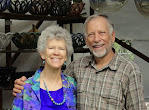
Eduardo Mamani with Tara, yams cooking in the Sun Star that we built in 1997, and the brand new ULOG with extra reflectors on the right.
Cross Cultural Exchange
At the invitation of the
Munincipalidad de El Collao, Ilave, Sam and I gave a Solar Cooking presentation and demonstration to a gathering of at least 200 government officials from the area. We had a ULOG cooker newly made in Puno and an older 4 reflector panel we had made in 1997 on Taquile Island. We cooked yams in both cookers in partly cloudy conditions. Actually, they printed 300 copies of our cooker building instructions and ran out.
We were introduced as
campesinos from the United States, which means we live in the country (not the city) and have an agricultural connection. All true. The audience for my talk was very attentive. Many understood my Spanish, but the talk was translated into Aymara as well. I got the biggest fun responses when I described how to cook a tough old hen past her egg-laying days by cooking it all day for free (no fuel use, just the sun) in a solar cooking for a nice tender meat soup.
Of course, the main advantages of solar cooking are 1) saving fuel costs, 2) saving time--since you can merely adjust the cooker every hour or so and get on with your business, 3) protecting the environment--less deforestation, less smoke, less fossil fuels 4) protecting health--free water purification and no lung impacts from smoky wood fires in an enclosed kitchen. Some areas in this region are suffering from floods as a result of the heavy rains this year, so protecting the ground cover and sterilizing water are priorities.
Sunday is market day in Ilave, so the town was hopping. Besides, it is still Carnaval so we came acrosss beautiful constumed dancers, funny clowns. Also, the different cultural style of dress for this region is beautiful: emboridered short jackets on some women, full skirts (longer than on Taquile), colorful and elaborate.
We are invited to return on Tuesday to demonstrate and present again for a women's group which promotes breast feeding and family health.
Here's a coincidence. Alipia comes to Taquile most Tuesdays and walks around the island from house to house selling bread and whatever else she things she can sell. Last week it was extra skirts for Carnaval dress up. She lives in Ilave and is a member of the women's group for which we will demonstrate this Tuesday. Besides that, she is a good friend of our co-mother, Eufrasia, and stays in our house when she stays overnight on Taquile! Eduardo had asked to to bring us our official invitation from the
municipalidad, only because he know she was going to Taquile, and thought she might find us on the paths, but here she was a guest in our home, and no trouble finding us.
Madres: Vaso de Leche
Tuesday we returned to Ilave to repeat Sunday's talk for about 250 women. The talks before ours included information about safe pregnancies, child nutrition and prevention of domestic violence. We were the last speakers. I was brief because the sun was good for cooking and the yams were already well cooked after under 2 hours in cookers up on the roof. Lots of good questions and interest from the women.
Before we left City Hall, we were introduced to the City Manager, a handsome and personable man, who, it turns out, has his own solar cooker. In fact, he has the 3 cooker combination promoted by Cedesol, our friends in Bolivia.
http://www.cedesol.org David and Ruth recommend a combination of super efficient twig stove, ULOG solar cooker and heat retention cooking. The latter is when you wrap up the partially cooked food while it is still hot so it continues cooking with the retained heat, sometimes known as a hay box, although blankets or any sort of insulation works.
He also told us about a community with 150 cookers, also from David and Ruth's project of several years ago. I suggested that they enroll those people to help promote solar cooking in the rest of the region. They invited us to come back and help do the promotion, which we would love, but really if they have their own people we can just come and help coach after they get started.
Quick conclusion is that the City and County of Ilave now has a lot of excitement going about solar cooking. Groups of carpenters may work together to build quantities of cookers at a lower cost to distribute in the rural areas. I'll be excited to see how they progress by the time we visit again, probably in 2 years.


 ElectroSol in Bellavista neighborhood sells solar PV panels and parts, thermal hot water systems, and this one style of parabolic solar cooker (done for the day).